Let me try to recap what I have been working on since the beginning of the year.
An Aborted Beginning
After a family member passed just before the holidays, and a funeral and family reunion overshadowed by a cold front bringing blizzards, traffic chaos, and ill health, the year started off on a sad and emotionally grey note; feelings and thoughts all over the place. At work, we were all heading for a fresh start in a new organisation after a straining and exhausting year of reorganisation, with new leaders, new departments, and new colleagues and a lot of unknowns, questions, and conflicting feelings. I was also starting the final year of my project BærUt! Sustainable Digital Scholarly Editions Network and Skills Hub, and I was planning to kick off the year with the feasibility study and preparations for the closing conference.
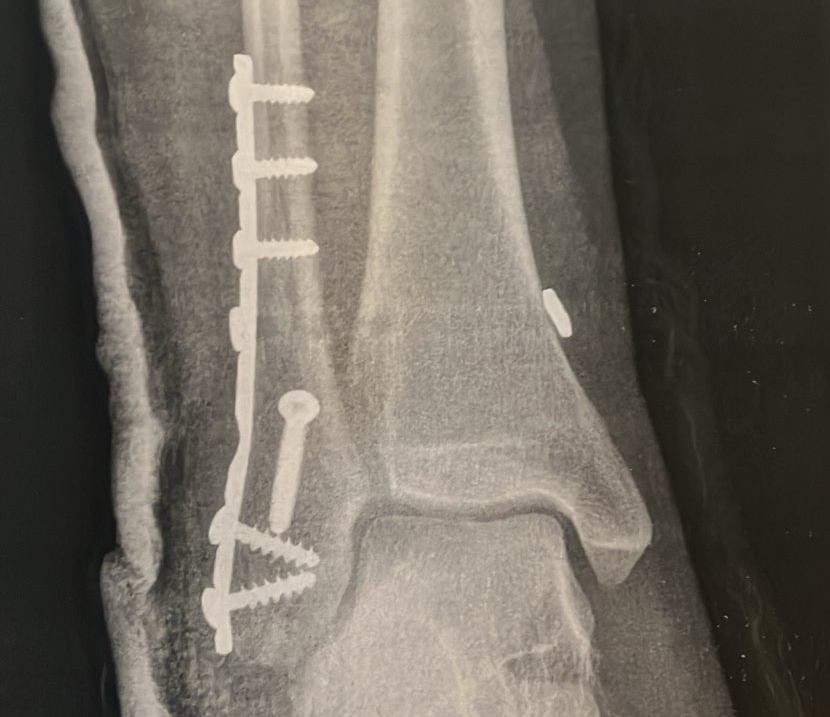
Then I broke my leg at the end of January, and everything came to a halt; the beginning of 2026 was aborted, and I was forced to take a time-out for two months. During this time, I was in awkward positions on the sofa or in the bed, trying to heal and relieve pain and discomfort, while also passing the time with activities like knitting, embroidery, or writing. I did indeed knit a lot, but had to put the embroidery aside because it was not ergonomically feasible. The writing, however, was what really kept me going.
Writing and Healing
During these weeks of forced immobility, I dove deep into my research and collection project on Norwegian exlibris, created a new blog on Hypotheses.org for the topic, and moved what I had previously written elsewhere onto the new platform, so it would be easier to add to and expand as I progressed through the project. I put a lot of effort and many hours of research and writing into the first large article, an artist portrait of Frøydis Haavardsholm, a leading figure in the decorative arts in early 20th-century Norway, who created two dozen or more exlibris that were first considered among the finest Norwegian ones, but later got forgotten and were entirely undocumented. It was fun and satisfying to write, and from the responses I received, I felt like I was uncovering interesting aspects of Norwegian cultural history that others would be interested in hearing about.
I quickly developed a writing routine and wrote blog posts on all kinds of exlibris-related materials; at the same time, I actively built my collection, adding both exlibris and exlibris literature; and I co-funded several art projects and the publication of a special issue of the German Exlibris Society’s magazine, Berlin und die Exlibriskunst. I also bought another large Svallaug Svalastoga colour woodcut from 1956.
Reorganisation
When I re-entered the workforce after Easter, nothing felt right; the new organisation held its kick-off without me, and things were already rolling along. And I didn’t know where my place was. I had been the team lead for Digital Research Methods in the Humanities and Social Sciences since 2021, but with the new organisation, all the old teams had either disappeared or been merged into newly established sections within new departments; the future of my team was – and still is – unknown. We kept the previously established meeting routines, but the enthusiasm, energy, and fun were clearly gone. The section I was placed in, after I had repeatedly asked to be placed in a different one, didn’t yet have a new section lead, and with my many accommodations and special needs, the absence of a steady, easily approachable HR manager was sorely felt.
And then, as time passed and deadlines approached, I had to make the difficult decision to cancel the feasibility study and focus solely on finishing and documenting the proof of concept, and on moving forward with the closing conference. The future of BærUt! after funding runs out this year is also uncertain, as the new organisation hasn’t settled on or committed to any direction for the project. Will the library adopt the research support service I have been building over three years and transition it into routine operations? Will the library try out and eventually commit to a publication outlet for digital editions? Will we intensify training – both internally and towards researchers and support staff at UiO? I don’t know, and so does nobody else.
Finalising the Project
After many weeks of intense conversations, brainstorming, and research, we eventually landed on a theme and topic for the closing conference and published the Call for Participation. I felt relieved. We also took a significant step toward publishing the proof of concept, the Oscar Mamen edition of Atter Et År i Østen, a 212-page typewritten manuscript about Mamen’s last trip to the Far East in 1937 to 1938, where he liquidated his company and assets in China and Mongolia and collected artefacts for the Museum of Cultural History in Oslo. We decided on a full-on TEI encoding, keeping track of three layers of author revisions, documenting Mamen’s unusual orthography and spelling of Mongolian and Chinese names and places, and writing a thorough commentary for the biographical and cultural-political context of the text. Again, I learned that everything takes forever and that transitioning from an ambitious plan to reality is neither smooth nor easy.
Gathering the Threads
It’s almost an established routine that I take research leave at the end of June, when University operations have slowed down, meetings are few and far between, and the once-busy corridors and break rooms quieten. It’s when I have the mental space to do a research leave without risking distractions from day-to-day office work.
I was keen on immersing myself in Norwegian exlibris culture and set a concrete goal for my two-week leave: to find the archives of the Norwegian Exlibris Society, which was dissolved in 1961. In the Society’s statutes, it was decreed that the archives would be donated to the University Library of Oslo. I knew that after the “divorce” of the University of Oslo Library and the National Library in the 1990s, almost all the collections with Norwegian materials in the holdings of the University Library were transferred to the National Library, and my assumption was that if there was an archive from the Exlibris Society, it would be at the National Library today. I sent them a request, as their online catalogue did not return any results.
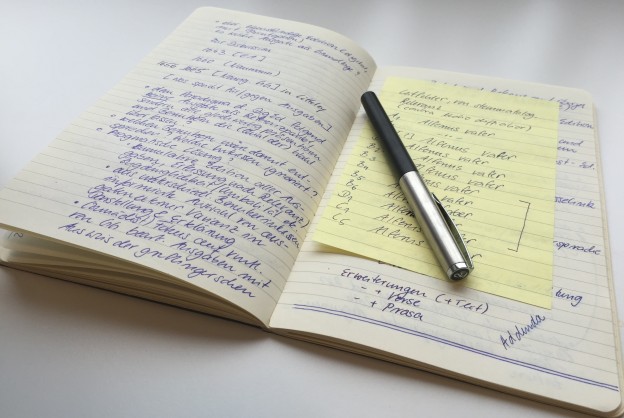
After a bit of back-and-forth and several emails forwarded to the National Library’s Private Archives and the Ephemera Collection, they could at least locate the Library’s own exlibris collection, as well as several donated collections and exlibrisiana that had entered either the Private Archives or the Ephemera Collection, more or less randomly. I wrote extensively about my finds on the Norwegian Exlibris blog and considered my stay there a win, even though the Society’s archives could not be located. It was only after I had sent back all materials I had worked with and documented that I received an email with the fantastic news that indeed the archives were found, as an undescribed and uncatalogued unit measuring five shelf meters in the Ephemera collection, between two shelf marks. It came with a handwritten How-To-Use guide from 1994, which I was sent, too. This find is wonderful, and I will do another trip to the National Library during the fall and document what they have!
While working with the other exlibris materials, I came across a note about Arne Arnesen, the former head of the library of Deichmanske, the Oslo Public Library. He was one of the early exlibris collectors and communicators, and I remembered having read about an exlibris exhibition at the Deichman Library. I wondered if the library still had documentation about this event, and contacted them. I received an enthusiastic reply from the library’s special collections librarian, and we agreed to meet and review their exlibris materials right away. Suffice to say, we found gold, again! Not only did I find the Deichman Library’s own exlibris collection, both orderly and neatly packed, but also a heap of sadness dating back several decades. I actually found remains of the exhibition, which was held in 1941 as part of a competition for the new Deichman Library’s exlibris for donated books. As it turned out, the majority of the documentation and all the drafts sent in were held at the Oslo City Archives, as the Deichman Library doesn’t maintain its own archive in the new building at Bjørvika. Only some drafts were still in the exlibris collection, and I was lucky to find them! The City Archives were already closed for the summer, so this trip, as the one to the National Library, will have to wait until the fall.
Wrapping Up
As summer time was impacting my research leave with shortened opening hours, staff on holiday, and way too warm weather, I decided to call it a day and relocated to my office at the University Library for the last days of my leave. I had to shut down operations for the summer holidays anyway, and might as well do it all together in the first week of July.
One cannot foresee the future, even with above-average prediction skills. That the Sustainable Digital Scholarly Editions project would be delayed again because I broke my leg didn’t factor into my planning. I still believe cancelling the feasibility study was ok; I have gathered so much information over the past three years that I will be confident in proposing a research support service for the period after the project’s end, based on facts and well-documented experiences. The proof of concept will be a solid case, replacing the feasibility study, and together with the results of the mapping study we did in 2024 and 2025, we have enough material.
For the fall, the majority of my time will be dedicated to wrapping up BærUt! The conference will be held in late November, and all documentation, which we have been keeping up to date throughout the project, will be finalised in December. The last skills-developing workshop, Handwritten Text Recognition with Transkribus, will be held during the Digital Scholarship Days 2027 in week 2 of 2027.
During my remaining research leave, which I have not yet plotted on my calendar, I will document the Norwegian Exlibris Society’s archives and the National Library, as well as the exlibris competition and exhibition at the Deichman Oslo Library. I will also give an evening talk about Norwegian Exlibris for the Norwegian Library and Book History Society on 8th September. I also have an article about the Norwegian exlibris portfolios ready, which will be published in the 2027 Yearbook of the German Exlibris Society.
All in all, and despite the bleak start of 2026, I managed to do well and ended on a much happier, much lighter note.